

Hello!
Today we will migrate an existing Xamarin.Forms Application to .NET MAUI! As a victim I chose my KanbanBoard app.
Installation
First of all, we need to verify if we have prepared the development environment. One of the tools for that is MAUI Check. Run the next commands in PowerShell:
dotnet tool install -g Redth.Net.Maui.Check
maui-check
It will automatically attempt to fix any issues, but I highly recommend using the Visual Studio installer.
Solution Configuration
Edit solution file
Remove Platform-specific projects;
Remove unused Solution Configuration Platforms
The base solution configuration is done.
It's project time
.NET MAUI introduces the Single project concept, SDK-project style, and much more. Let's first migrate our platforms to the "Shared" project.
Create the "Platforms" folder in the "Shared" project. Then for each platform create a folder in the "Platforms" project:
Android
iOS
MacCatalyst
Windows
Tizen
1.1. Android
Copy AndroidManifest.xml, MainActivity.cs, MainApplication.cs, all your services, Resources folder to the Android folder.
1.2. iOS, macOS
Copy Main.cs, Info.plist, Entitlements.plist, AppDelegate.cs, and all your services to the iOS/MacCatalyst folder.
1.3. Windows
Copy Package.appxmanifest, App.xaml, App.xaml.cs, app.manifest to the Windows folder.
1.4. Tizen
Copy Main.cs, tizen-manifest.xml to the Tizen folder.
Delete Old platforms project folders.
Now we need to modify and change these files
From
AndroidManifest.xmlremove the package name, version code, and version name. We will set these settings later in csproj file.Replace
MainActivity.cscontent with:
namespace YourNamespace;

using Android.App;
using Android.Content.PM;

[Activity(Theme = "@style/Maui.SplashTheme",
		MainLauncher = true,
		Label = "YOUR_APP_TITLE")]
public class MainActivity : MauiAppCompatActivity
{
}
Replace
MainApplication.cscontent with:
namespace YourNamespace;
using Android.App;
using Android.Runtime;

[Application]
public class MainApplication : MauiApplication
{
    public MainApplication(IntPtr handle, JniHandleOwnership ownership)
        : base(handle, ownership)
    {
    }

    protected override MauiApp CreateMauiApp() => MauiProgram.CreateMauiApp();
}
Replace
AppDelegate.cscontent with:
using Foundation;

namespace YourNamespace;

[Register(nameof(AppDelegate))]
public class AppDelegate : MauiUIApplicationDelegate
{
    protected override MauiApp CreateMauiApp()
    {
        return MauiProgram.CreateMauiApp();
    }
}
Replace
App.xamlfrom Windows folder with:
<maui:MauiWinUIApplication
    x:Class="YourNamespace.WinUI.App"
    xmlns="http://schemas.microsoft.com/winfx/2006/xaml/presentation"
    xmlns:x="http://schemas.microsoft.com/winfx/2006/xaml"
    xmlns:maui="using:Microsoft.Maui"
    xmlns:local="YourNamespace.WinUI">

</maui:MauiWinUIApplication>
Replace
App.xaml.csfrom Windows folder with:
namespace YourNamespace.WinUI;

public partial class App : MauiWinUIApplication
{
	public App()
	{
		this.InitializeComponent();
	}

	protected override MauiApp CreateMauiApp() => MauiProgram.CreateMauiApp();
}
Replace
Package.appxmanifestcontent with the next:
<?xml version="1.0" encoding="utf-8"?>
<Package
  xmlns="http://schemas.microsoft.com/appx/manifest/foundation/windows10"
  xmlns:uap="http://schemas.microsoft.com/appx/manifest/uap/windows10"
  xmlns:rescap="http://schemas.microsoft.com/appx/manifest/foundation/windows10/restrictedcapabilities"
  IgnorableNamespaces="uap rescap">

  <Identity Name="maui-package-name-placeholder" Publisher="CN=Your Publisher Name" Version="0.0.0.0" />

  <Properties>
    <PublisherDisplayName>Your Publisher Name</PublisherDisplayName>
    <DisplayName>$placeholder$</DisplayName>
    <Logo>$placeholder$.png</Logo>
  </Properties>

  <Dependencies>
    <TargetDeviceFamily Name="Windows.Universal" MinVersion="10.0.17763.0" MaxVersionTested="10.0.19041.0" />
    <TargetDeviceFamily Name="Windows.Desktop" MinVersion="10.0.17763.0" MaxVersionTested="10.0.19041.0" />
  </Dependencies>

  <Resources>
    <Resource Language="x-generate" />
  </Resources>

  <Applications>
    <Application Id="App" Executable="$targetnametoken$.exe" EntryPoint="$targetentrypoint$">
      <uap:VisualElements
        DisplayName="$placeholder$"
        Description="$placeholder$"
        Square150x150Logo="$placeholder$.png"
        Square44x44Logo="$placeholder$.png"
        BackgroundColor="transparent">
        <uap:DefaultTile Square71x71Logo="$placeholder$.png" Wide310x150Logo="$placeholder$.png" Square310x310Logo="$placeholder$.png" />
        <uap:SplashScreen Image="$placeholder$.png" />
      </uap:VisualElements>
    </Application>
  </Applications>

  <Capabilities>
    <rescap:Capability Name="runFullTrust" />
  </Capabilities>

</Package>
Replace
Main.csfrom Tizen folder with:
namespace YourNamespace;

class Program : MauiApplication
{
	protected override MauiApp CreateMauiApp() => MauiProgram.CreateMauiApp();

	static void Main(string[] args)
	{
		var app = new Program();
		app.Run(args);
	}
}
Replace all
Xamarin.FormswithMicrosoft.Maui(somewhere you may need to addMicrosoft.Maui.ControlsReplace
App.xaml.csfile content in the root folder with the next code:
namespace YourNamespace;

public partial class App : Application
{
    public App()
    {
        InitializeComponent();
        MainPage = new MainPage();
    }
}
Create MauiProgram.cs with content:
namespace YourNamespace;

public static class MauiProgram
{
	public static MauiApp CreateMauiApp()
	{
		var builder = MauiApp.CreateBuilder();
		builder
			.UseMauiApp<App>()
			.ConfigureFonts(fonts =>
			{
				fonts.AddFont("fasolid.otf", "FASolid"); // move you fonts from AssemblyInfo here
			});
		builder.Services.AddTransient<IPath, DbPath>(); // here you register all your services for DI
		return builder.Build();
	}
}
Replace
xmlns="http://xamarin.com/schemas/2014/forms"withxmlns="http://schemas.microsoft.com/dotnet/2021/maui"Finally update csproj file with:
<Project Sdk="Microsoft.NET.Sdk">

	<PropertyGroup>
		<TargetFrameworks>net6.0-android;net6.0-ios;net6.0-maccatalyst</TargetFrameworks>
		<TargetFrameworks Condition="$([MSBuild]::IsOSPlatform('windows'))">$(TargetFrameworks);net6.0-windows10.0.19041.0</TargetFrameworks>
		<TargetFrameworks>$(TargetFrameworks);net6.0-tizen</TargetFrameworks>
		<OutputType>Exe</OutputType>
		<RootNamespace>YourNamespace</RootNamespace>
		<UseMaui>true</UseMaui>
		<SingleProject>true</SingleProject>
		<ImplicitUsings>enable</ImplicitUsings>

		<!-- Display name -->
		<ApplicationTitle>YourTitle</ApplicationTitle>

		<!-- App Identifier -->
		<ApplicationId>com.vladislavantonyuk.yournamespace</ApplicationId>
		<ApplicationIdGuid>F46BB7C8-E6A5-4D9E-AAFE-8173B0819787</ApplicationIdGuid>

		<!-- Versions -->
		<ApplicationDisplayVersion>1.0</ApplicationDisplayVersion>
		<ApplicationVersion>1</ApplicationVersion>

		<SupportedOSPlatformVersion Condition="$([MSBuild]::GetTargetPlatformIdentifier('$(TargetFramework)')) == 'ios'">14.2</SupportedOSPlatformVersion>
		<SupportedOSPlatformVersion Condition="$([MSBuild]::GetTargetPlatformIdentifier('$(TargetFramework)')) == 'maccatalyst'">14.0</SupportedOSPlatformVersion>
		<SupportedOSPlatformVersion Condition="$([MSBuild]::GetTargetPlatformIdentifier('$(TargetFramework)')) == 'android'">21.0</SupportedOSPlatformVersion>
		<SupportedOSPlatformVersion Condition="$([MSBuild]::GetTargetPlatformIdentifier('$(TargetFramework)')) == 'windows'">10.0.17763.0</SupportedOSPlatformVersion>
		<TargetPlatformMinVersion Condition="$([MSBuild]::GetTargetPlatformIdentifier('$(TargetFramework)')) == 'windows'">10.0.17763.0</TargetPlatformMinVersion>
		<SupportedOSPlatformVersion Condition="$([MSBuild]::GetTargetPlatformIdentifier('$(TargetFramework)')) == 'tizen'">6.5</SupportedOSPlatformVersion>
	</PropertyGroup>

	<ItemGroup>
		<!-- App Icon -->
		<MauiIcon Include="Resources\appicon.svg" ForegroundFile="Resources\appiconfg.svg" Color="#512BD4" />

		<!-- Splash Screen -->
		<MauiSplashScreen Include="Resources\appiconfg.svg" Color="#512BD4" BaseSize="128,128" />

		<!-- Images -->
		<MauiImage Include="Resources\Images\*" />

		<!-- Custom Fonts -->
		<MauiFont Include="Resources\Fonts\*" />

		<!-- Raw Assets (also remove the "Resources\Raw" prefix) -->
		<MauiAsset Include="Resources\Raw\**" LogicalName="%(RecursiveDir)%(Filename)%(Extension)" />
	</ItemGroup>
</Project>
Pay attention to the last ItemGroup. .NET MAUI is integrated with Resizetizer NT, so MauiImage and MauiFont will automatically prepare resources for all your applications.
Build and Run
# For Android
dotnet build KanbanBoard.csproj -t:Run -f net6.0-android
# For iOS
dotnet build KanbanBoard.csproj -t:Run -f net6.0-ios
# For macOS
dotnet build KanbanBoard.csproj -t:Run -f net6.0-maccatalyst
# For Windows
dotnet build KanbanBoard.csproj -t:Run -f net6.0-windows10.0.19041.0
Issues
1. Android deployment (Solved)
I was not able to deploy the application to the device until specified the RuntimeIdentifiers for Android. Add this line to the PropertyGroup in your csproj file:
<RuntimeIdentifiers Condition="$(TargetFramework.Contains('-android'))">android-arm;android-arm64;android-x86;android-x64</RuntimeIdentifiers>2. iOS Device deployment (Solved)
I was not able to deploy the application to the device until specified the RuntimeIdentifiers. Add this line to the csproj file:
<PropertyGroup Condition="$([MSBuild]::GetTargetPlatformIdentifier('$(TargetFramework)')) == 'ios' and $(Configuration) == 'Release'">
	<RuntimeIdentifier>ios-arm64</RuntimeIdentifier>
	<CodesignEntitlement>Entitlements.plist</CodesignEntitlement>
	<ArchiveOnBuild>true</ArchiveOnBuild>
</PropertyGroup>

<PropertyGroup Condition="$([MSBuild]::GetTargetPlatformIdentifier('$(TargetFramework)')) == 'ios' and $(Configuration) == 'Debug'">
	<RuntimeIdentifier>ios-arm64</RuntimeIdentifier>
	<RuntimeIdentifier>iossimulator-x64</RuntimeIdentifier>
</PropertyGroup>
3. Windows release (Solved)
To generate the Appx file add the next code to the csproj file:
<PropertyGroup Condition="$(TargetFramework.Contains('-windows')) and '$(Configuration)' == 'Release'">
	<GenerateAppxPackageOnBuild>true</GenerateAppxPackageOnBuild>
	<AppxPackageSigningEnabled>False</AppxPackageSigningEnabled>
</PropertyGroup>
The final result: 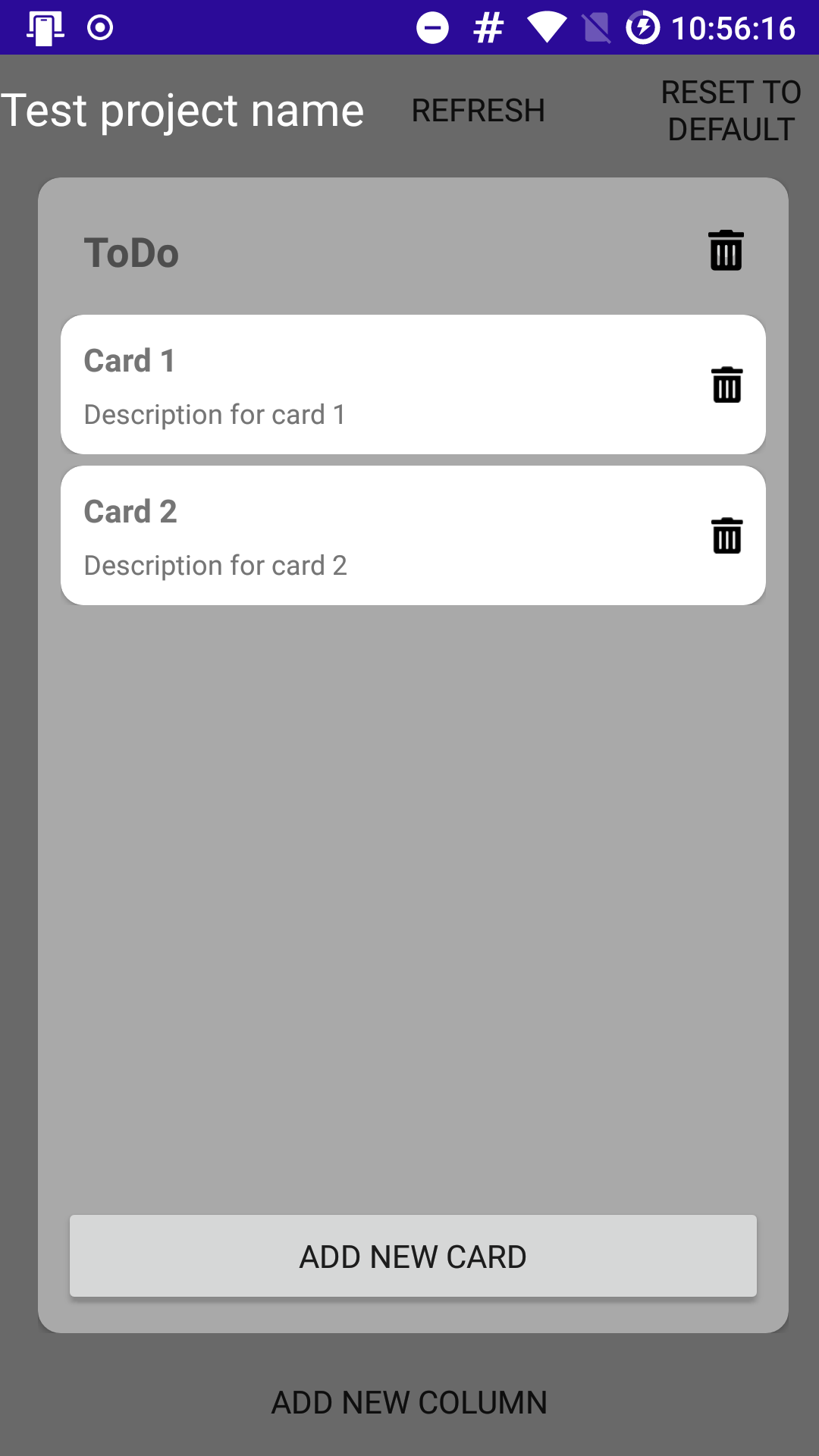
You can find the code changes on GitHub