
Hello!
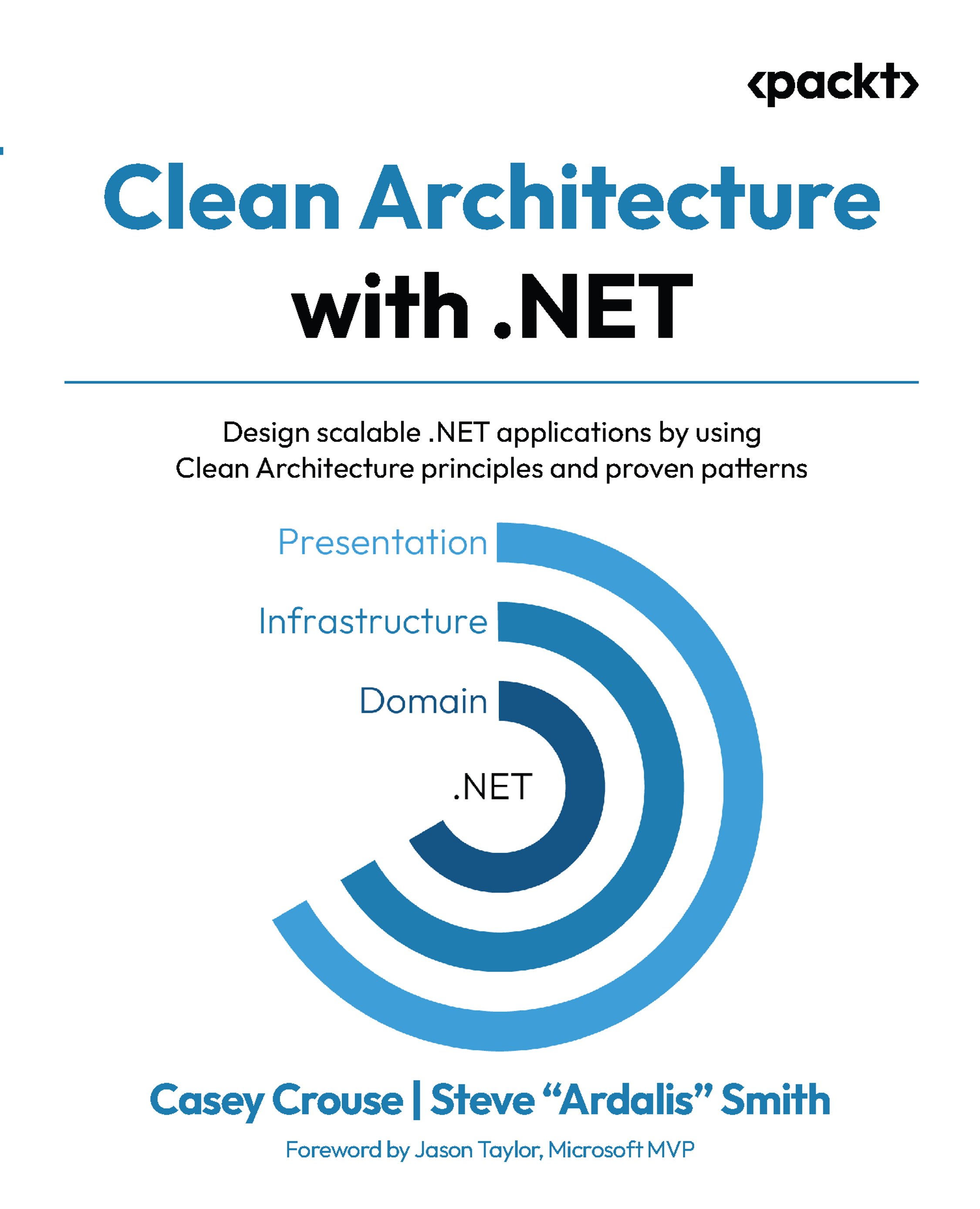
If you don't know what to do this summer, I highly recommend reading "Clean Architecture with .NET: Design scalable .NET applications by using Clean Architecture principles and proven patterns" by Casey Crouse and Steve "Ardalis" Smith. I just finished it and wanted to share my detailed thoughts and personal feedback on it.
My Take on the Book
This isn’t just another dry textbook full of detached, abstract theory. Instead, it’s a highly practical, specialized guide designed for mid-level and senior engineers who are actively building enterprise systems on the .NET platform.
The entire book is centered around a single, end-to-end practical case study: taking a bloated, tightly coupled monolithic application named "CleanCart.NET" (Project "Odyssey") and refactoring it step-by-step into a flexible, decoupled structure using Clean Architecture principles.
The Pros: Where It Really Shines
An Evolutionary Approach to Refactoring: I love that the material is built entirely around an active refactoring pipeline. You aren't just shown perfect "greenfield" code; you see the messy initial state, the exact prerequisites driving each architectural change, and the direct, measurable impact on maintainability.
A Modern, Real-World Stack: The authors don’t take shortcuts with the technology. They seamlessly integrate a modern .NET ecosystem: Blazor Server for the presentation layer, EF Core for data access, MediatR for the CQRS pattern, and FluentValidation for isolating business rules. They even dive into enterprise security using Microsoft Entra External ID and Azure Key Vault.
A Deeply Embedded Testing Culture: As someone who relies heavily on automated verification, this was easily my favorite aspect of the book. The testing coverage is incredibly comprehensive. The authors demonstrate proper AAA (Arrange-Act-Assert) methodology, using xUnit and NSubstitute to mock and test use-case logic, bUnit for isolated UI components, and Testcontainers (Docker) alongside the Respawn library to spin up real databases and cleanly reset state between integration test runs.
Architectural Pragmatism: There is zero dogmatism here, which is incredibly refreshing. The authors explicitly dedicate space to analyzing the boundaries of the pattern, openly stating where Clean Architecture is a bad fit—like small projects, quick proof-of-concept prototypes, basic CRUD apps, or low-latency systems where abstraction layers introduce unacceptable performance delays.
The Cons: Architectural Trade-offs & Compromises
The "Purity Tax" (Structural Complexity): The book makes it very clear that code purity doesn't come for free. The sheer volume of boilerplate overhead—the explosion of projects in the solution, endless interfaces, redundant DTOs, and the continuous need to configure object mapping (like AutoMapper)—inevitably hurts your development velocity during the early stages of a project.
Layer-First Over Feature-First: The solution structure strictly adheres to technical layers (Presentation, Application, Domain, Infrastructure). In my opinion, once an enterprise system grows past a certain threshold, a traditional layer-first organization makes navigation much more tedious compared to a Feature-First (Vertical Slice) approach. I would have loved to see a deeper comparison here.
Intentional Anomalies: Teaching via Anti-Patterns
To keep the narrative clear and highlight specific architectural pain points, the authors intentionally left a few technical "artifacts" and temporary violations in the text, which they openly call out:
The 1,000-Line Monster (Chapter 1): The initial
ShoppingCartController.csis packed with horrific design flaws, from SQL injection vulnerabilities to hardcoded paths and mutable global state. The authors explicitly mention that parts of this chaotic file were AI-generated specifically to pack as many terrible practices into one place as possible for future refactoring.The Temporary DB Leak (Chapter 8): In
LoginDisplay.razor.cs, database logic is placed directly inside the UI component. It’s an intentional rule violation used to keep the development narrative linear and readable; they properly extract and migrate this code to the Application layer in Chapter 9.Hardcoded Connection Strings (Chapter 7): During the infrastructure testing phase inside
TestInitializer, they use a hardcoded Azure SQL string. They explicitly warn the reader that this is strictly for temporary demonstration and a massive "do-not-commit" for Git hygiene.
Final Verdict
The 2026 edition of Clean Architecture with .NET is an exceptionally mature, factually accurate, and relevant guide. It does a fantastic job of anchoring Robert C. Martin's foundational architectural concepts into the modern realities of the .NET toolset. If your day-to-day goal is building sustainable, highly testable enterprise code, this book deserves a spot on your reading list this summer.